C3 Climate Network Explorer
Use the controls below to explore how CUNY’s climate community connects across colleges, disciplines, research themes, and collaboration areas.
Help Build the C3 Climate Network
The C3 Climate Network Explorer is only as strong as the information people choose to share. By adding or updating your profile, you help make CUNY’s climate community more visible across colleges, disciplines, methods, and areas of public work. The goal is not simply to create a directory, but to support more meaningful connections: helping researchers, students, staff, centers, and community-facing programs find one another around shared questions and complementary strengths.
Your research interests, teaching, methods, affiliations, and public scholarship all help reveal the broader shape of climate work at CUNY. Contributing your information helps C3 identify emerging clusters, support collaborations, and build stronger pathways for future workshops, working groups, grants, and public-facing climate projects.
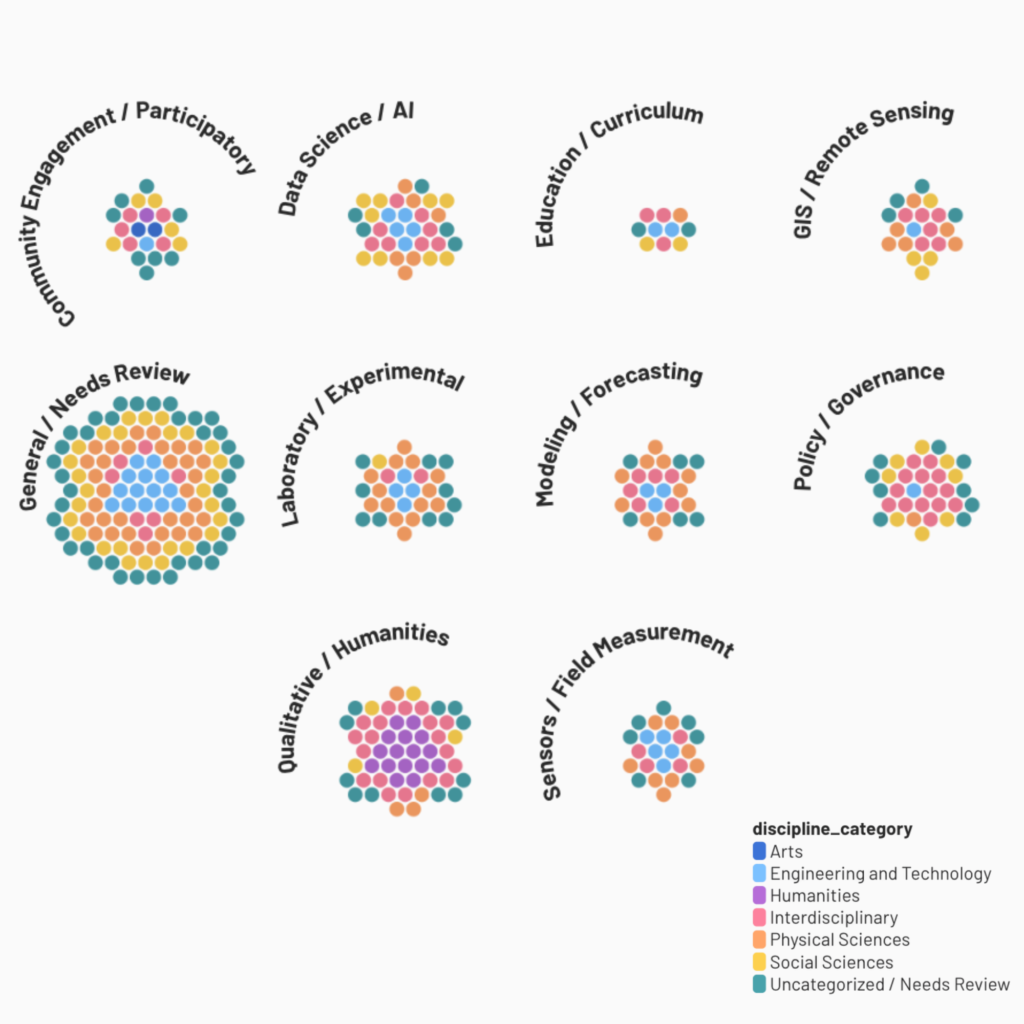
Methods as Pathways for Collaboration
CUNY’s climate community brings together many ways of studying, teaching, communicating, and acting on climate change. Methods can be where collaboration begins: a researcher working with spatial data may connect with someone doing community-based fieldwork; a public health scholar may find common ground with an urban planner, artist, engineer, or policy researcher.
Seeing methods across the network helps make these possible connections more visible. It also reminds us that climate work is not the domain of a single discipline or approach. The strength of C3 is in creating spaces where different forms of expertise can meet, translate, and build together.
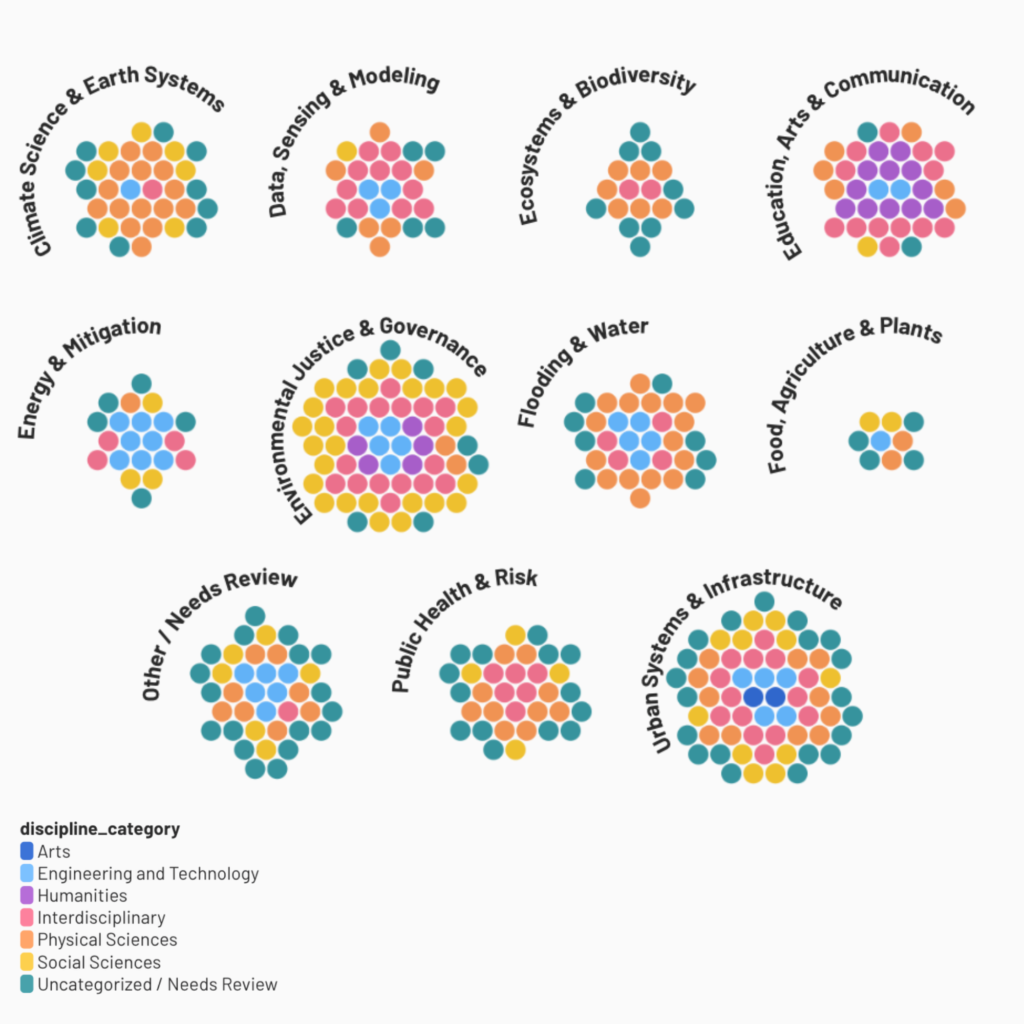
Shared Ground and Research Themes
Shared questions connect CUNY’s climate community across campuses and disciplines; Topics like flooding, heat, environmental justice, energy, public health, education, infrastructure, and ecological change often appear in different departments under different names. Making those overlaps visible can help people recognize shared concerns, even when their methods or institutional homes differ.
Getting a more complete picture of these interconnections supports more intentional collaboration: it can help C3 identify emerging areas of interest, invite the right people into conversations, and build stronger cross-campus working groups.
A growing map of climate research, teaching, public scholarship, and collaboration across CUNY.
376 Profiles · 21 CUNY Campuses & Units · 10 Research Themes
Add/Edit or Complete your profile here
Why Add Your Profile?
Adding your profile helps C3 make CUNY’s climate work easier to find, connect, and support. The Explorer can help identify shared research interests, complementary methods, cross-campus connections, and emerging areas for collaboration. The more complete the network becomes, the more useful it is for workshops, working groups, grant teams, student opportunities, and public-facing climate initiatives.
What You Can Share
Profiles can include your CUNY affiliations, discipline category, research themes, methods, teaching interests, public scholarship, organizing experience, and the communities or geographies connected to your work. You do not need to fit neatly into one category.
About the Data
The C3 Climate Network Explorer is a growing dataset, not a complete census of all climate work at CUNY. Initial entries were compiled from C3 network information through CUNY websites and are being refined through community updates. Categories are used to support discovery and visualization, but they may simplify complex interdisciplinary work. Submissions are reviewed before being added to the public site, and participants can request updates or corrections at any time.
How to Use the Explorer
Use the controls to group and shade the network by affiliation, discipline, research theme, method, or collaboration area. Each dot represents one person. Hover or click on a dot to view available profile information. The visualization is meant to help viewers notice patterns, discover possible collaborators, and see how climate work is distributed across CUNY.
What comes next?
The Explorer is a first step toward a more connected climate research infrastructure across CUNY.
Latest Update: June 2026

